Education Loan EMI: Complete Guide for Students
MBA Finance | CFA | Ex-Banker
Published March 07, 2026
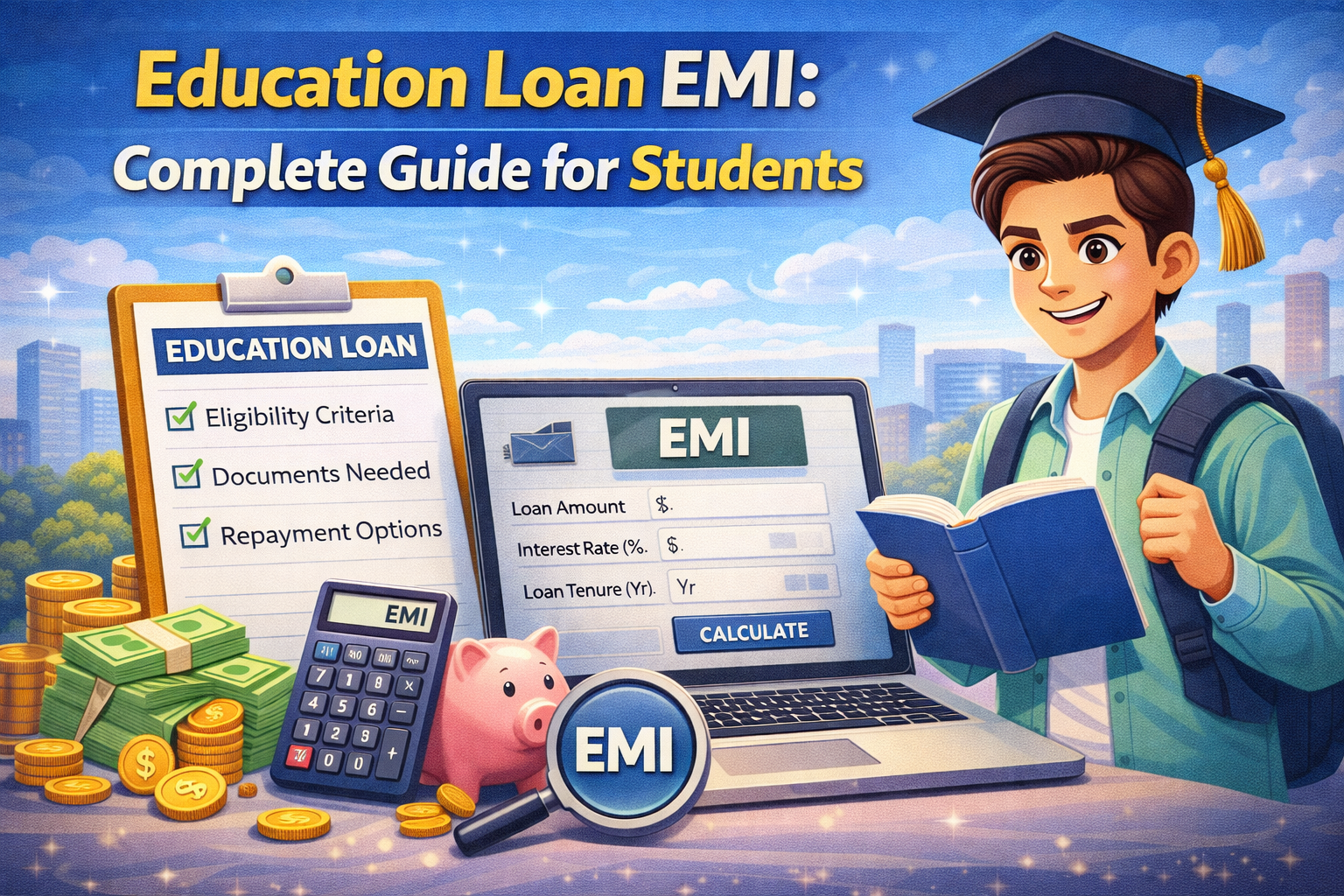
Education Loan EMI: Complete Guide for Students
Higher education is one of the most valuable investments a student can make for their future. However, the cost of education has increased significantly over the past few years, especially for professional courses and international studies. Because of this, many students and families rely on education loans to fund their academic goals.
An education loan helps cover expenses such as tuition fees, hostel charges, books, travel costs, and other academic expenses. While taking an education loan can help students achieve their dreams, it is important to understand how loan repayment works, especially the EMI (Equated Monthly Installment).
Understanding how EMIs are calculated, when repayment begins, and how interest works can help students plan their finances better and avoid repayment difficulties in the future. In this complete guide, we will explain everything students need to know about education loan EMIs.
What is an Education Loan?
An education loan is a financial product offered by banks and financial institutions to help students pay for higher education. The loan amount can be used for undergraduate courses, postgraduate programs, professional degrees, and even studies abroad.
Most banks offer education loans with flexible repayment options and lower interest rates compared to personal loans. The repayment usually starts after the completion of the course or after a certain grace period known as the moratorium period.
What is EMI in an Education Loan?
EMI stands for Equated Monthly Installment. It is the fixed monthly payment made by the borrower to repay the education loan. Each EMI consists of two components:
Principal Amount: The actual loan amount borrowed from the bank.
Interest Amount: The cost charged by the bank for lending the money.
During the early stages of repayment, a larger portion of the EMI goes toward interest, while later installments contribute more toward repaying the principal amount.
Typical Education Loan Interest Rates
Education loan interest rates vary depending on the bank, loan amount, and type of course. Government-backed education loans often offer lower interest rates compared to private lenders.
| Bank | Interest Rate | Maximum Loan Amount |
|---|---|---|
| State Bank of India | 8.15% – 10.15% | Up to ₹1.5 Crore |
| HDFC Bank | 9.00% – 12.00% | Up to ₹45 Lakh |
| ICICI Bank | 9.25% – 11.50% | Up to ₹1 Crore |
| Axis Bank | 9.50% – 12.50% | Up to ₹75 Lakh |
Education Loan EMI Calculation Example
Let’s understand how EMI works with a simple example.
| Loan Amount | Interest Rate | Tenure | Monthly EMI |
|---|---|---|---|
| ₹10,00,000 | 9% | 10 Years | ₹12,668 |
| ₹15,00,000 | 9% | 10 Years | ₹19,002 |
| ₹20,00,000 | 9% | 10 Years | ₹25,336 |
These EMI values are approximate and may vary depending on the bank’s interest rate and loan policies.
Moratorium Period Explained
One of the biggest advantages of education loans is the moratorium period. This is the time during which students are not required to start full EMI repayment.
The moratorium period usually includes:
Course duration + 6 to 12 months after completing the course.
During this time, some banks allow students to pay only the interest amount, while others allow full repayment to begin after the moratorium period ends.
Expenses Covered by Education Loans
Education loans usually cover a wide range of academic expenses.
Common expenses covered include:
Tuition fees
Hostel or accommodation fees
Books and study materials
Laptop or computer costs
Travel expenses for studying abroad
Examination and library fees
Documents Required for Education Loan
To apply for an education loan, banks require several documents for verification.
Typical documents include:
Student admission letter from the institution
Academic records and certificates
Identity proof such as Aadhaar or PAN card
Address proof
Income proof of parent or co-applicant
Bank account statements
Tips to Manage Education Loan EMI
Managing education loan EMIs properly can help reduce financial pressure after graduation.
Start Interest Payments Early: Paying interest during the moratorium period reduces the total loan burden.
Choose Affordable Tenure: A longer tenure reduces EMI but increases overall interest cost.
Use EMI Calculators: Online EMI calculators help estimate monthly payments before taking the loan.
Consider Prepayment: If your income increases after getting a job, making extra payments can reduce the loan faster.
Government Schemes for Education Loans
The Indian government also supports students through various education loan schemes and interest subsidies.
Some popular schemes include:
Central Sector Interest Subsidy Scheme (CSIS)
Vidya Lakshmi Education Loan Portal
Dr. Ambedkar Education Loan Scheme
These schemes aim to make higher education more accessible for students from economically weaker backgrounds.
Conclusion
Education loans provide an excellent opportunity for students to pursue higher education without immediate financial pressure. However, understanding how loan EMIs work is essential for proper financial planning.
Before taking an education loan, students and families should carefully compare interest rates, repayment terms, and bank policies. Using EMI calculators, planning repayments early, and taking advantage of government schemes can make loan repayment easier.
With proper planning and responsible borrowing, an education loan can be a powerful tool to invest in your future and build a successful career.
Student Tip: Always borrow only the amount you truly need for education. Lower loan amounts mean smaller EMIs and faster repayment after graduation.
About the Author
Admin
MBA Finance | CFA | Ex-Banker
Financial expert with 15+ years of experience in banking and personal finance.