Electric Vehicle (EV) Loans: Benefits and Interest Rates
MBA Finance | CFA | Ex-Banker
Published March 08, 2026
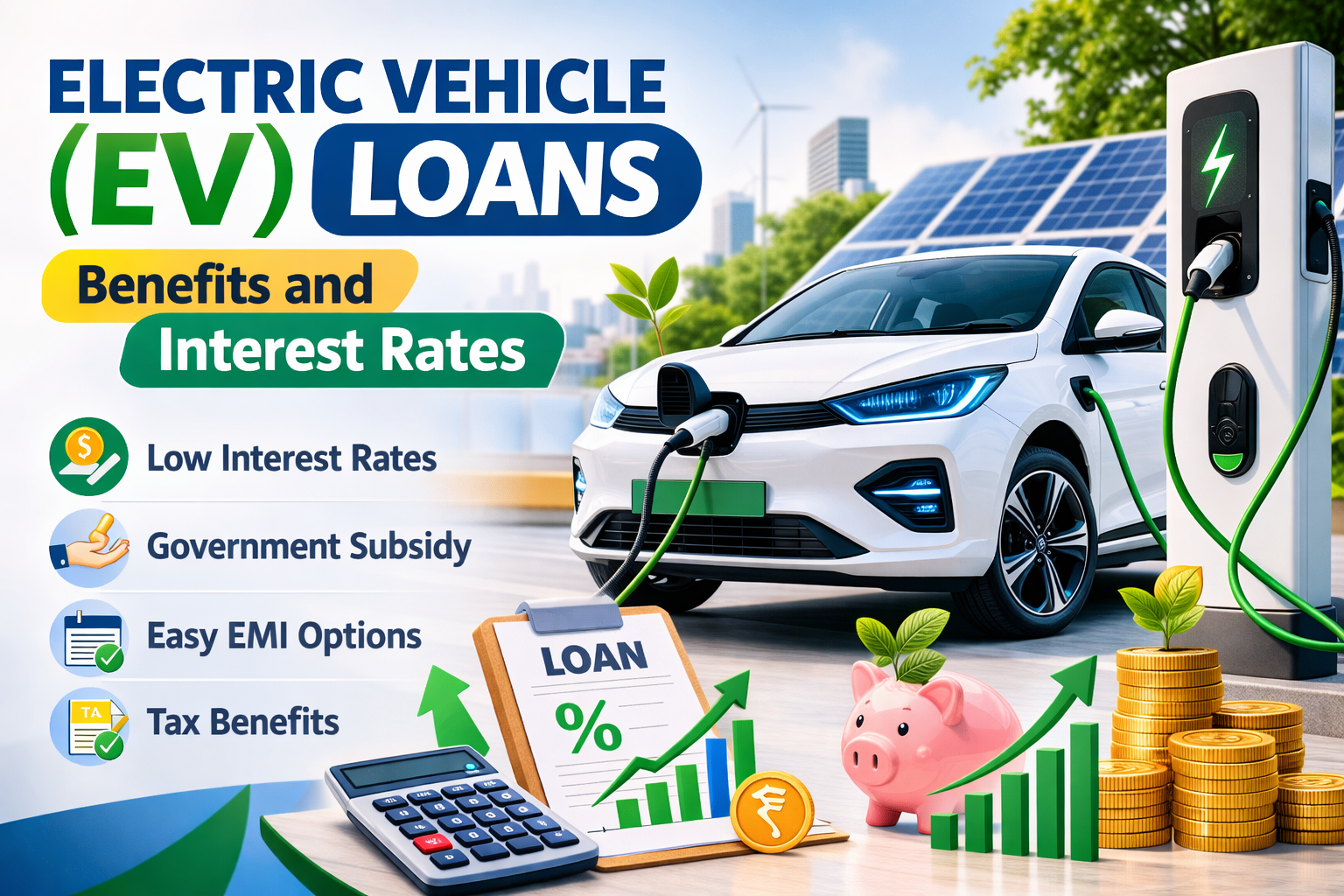
Electric Vehicle (EV) Loans: Benefits and Interest Rates
Electric Vehicles (EVs) are becoming increasingly popular in India as people look for cleaner, more sustainable transportation options. Governments and financial institutions are also encouraging EV adoption by offering incentives, subsidies, and specialized loan products. One of the most important financial tools helping buyers switch to electric vehicles is the EV loan, often called a green car loan.
An EV loan helps individuals finance the purchase of electric cars, electric scooters, and other battery-powered vehicles. These loans often come with attractive benefits such as lower interest rates, flexible repayment options, and government tax incentives. In this complete guide, we will explore EV loan benefits, interest rates, eligibility, EMI calculations, and tips to choose the best EV loan.
What is an Electric Vehicle Loan?
An Electric Vehicle loan is a type of vehicle financing designed specifically for purchasing electric cars, electric scooters, or electric commercial vehicles. Banks and financial institutions provide these loans to promote eco-friendly transportation and reduce carbon emissions.
EV loans are similar to traditional car loans but often include special incentives such as lower interest rates or reduced processing fees. In many cases, lenders finance up to 70–100% of the vehicle’s price depending on the borrower’s profile and credit score. :contentReference[oaicite:0]{index=0}
Current EV Loan Interest Rates in India
Interest rates for EV loans are generally slightly lower than regular vehicle loans because banks and governments want to promote green mobility. In India, EV loan interest rates typically range between about 8.15% and 10% depending on the bank, credit score, and loan amount. :contentReference[oaicite:1]{index=1}
| Bank | EV Loan Interest Rate | Loan Tenure |
|---|---|---|
| State Bank of India | From ~8.75% | Up to 8 Years |
| HDFC Bank | From ~9% | Up to 7 Years |
| ICICI Bank | From ~9% | Up to 7 Years |
| Axis Bank | From ~9.25% | Up to 7 Years |
| Punjab National Bank | Around 8% – 9% | Up to 7 Years |
In many cases, EV loan interest rates are slightly lower than petrol or diesel car loan rates, often by around 0.2%–1%, as part of green mobility initiatives. :contentReference[oaicite:2]{index=2}
Key Benefits of EV Loans
EV loans offer several financial and environmental advantages compared to traditional vehicle loans.
Lower Interest Rates: Banks often offer lower interest rates for EV loans to encourage environmentally friendly transportation.
Tax Benefits: Borrowers may claim tax deductions of up to ₹1.5 lakh per year on interest paid for EV loans under Section 80EEB of the Income Tax Act. :contentReference[oaicite:3]{index=3}
Higher Loan Amount: Some banks finance up to 100% of the vehicle’s on-road price including accessories and charging equipment.
Flexible Tenure: Loan tenure usually ranges between 3 and 8 years, allowing borrowers to choose comfortable EMI options. :contentReference[oaicite:4]{index=4}
Government Support: Many central and state government policies encourage EV purchases through subsidies and financial incentives.
EV Loan EMI Example
Let’s understand how EMI works with an example EV loan calculation.
| Loan Amount | Interest Rate | Tenure | Monthly EMI |
|---|---|---|---|
| ₹10,00,000 | 8.5% | 5 Years | ₹20,500 (approx) |
| ₹15,00,000 | 8.5% | 5 Years | ₹30,750 (approx) |
Actual EMI may vary depending on the bank’s interest rate, loan tenure, and borrower eligibility.
Eligibility for EV Loans
Eligibility criteria for EV loans are similar to regular vehicle loans. Banks evaluate the borrower’s income, credit score, employment stability, and repayment capacity.
Common eligibility requirements include:
Minimum age of 21 years
Stable income source
Good credit score (usually above 700)
Valid identity and address proof
Income documents such as salary slips or bank statements
Documents Required for EV Loan
Applicants typically need to submit several documents when applying for an EV loan.
Common documents include:
Aadhaar card or PAN card
Address proof
Recent salary slips or income proof
Bank account statements
Vehicle quotation from dealer
Passport-size photographs
EV Loan vs Traditional Car Loan
| Feature | EV Loan | Petrol/Diesel Car Loan |
|---|---|---|
| Interest Rate | Usually Lower | Slightly Higher |
| Government Support | Yes | Limited |
| Environmental Impact | Eco-Friendly | Higher Emissions |
| Fuel Cost | Very Low | Higher |
Tips to Get the Best EV Loan
Choosing the right EV loan can help you reduce borrowing costs and manage EMIs easily.
Compare Multiple Banks: Always compare interest rates and processing fees before applying.
Maintain a Good Credit Score: A higher credit score increases chances of getting lower interest rates.
Check Government Incentives: EV subsidies and tax deductions can significantly reduce the overall cost.
Choose Suitable Tenure: Select a loan tenure that keeps EMI affordable while minimizing total interest.
Conclusion
Electric vehicle loans are becoming increasingly popular as more people switch to sustainable transportation. With competitive interest rates, tax benefits, and government support, EV loans provide an affordable way to finance electric cars and two-wheelers.
Before applying for an EV loan, borrowers should compare lenders, review interest rates, and evaluate repayment options carefully. With proper planning, an EV loan can help you save money on fuel, reduce environmental impact, and enjoy the benefits of modern electric mobility.
Financial Tip: EV loans often come with slightly lower interest rates than traditional vehicle loans, making them a cost-effective option for buyers planning to switch to electric mobility.
About the Author
Admin
MBA Finance | CFA | Ex-Banker
Financial expert with 15+ years of experience in banking and personal finance.