Fixed vs Floating Interest Rate: Which One to Choose?
MBA Finance | CFA | Ex-Banker
Published March 05, 2026
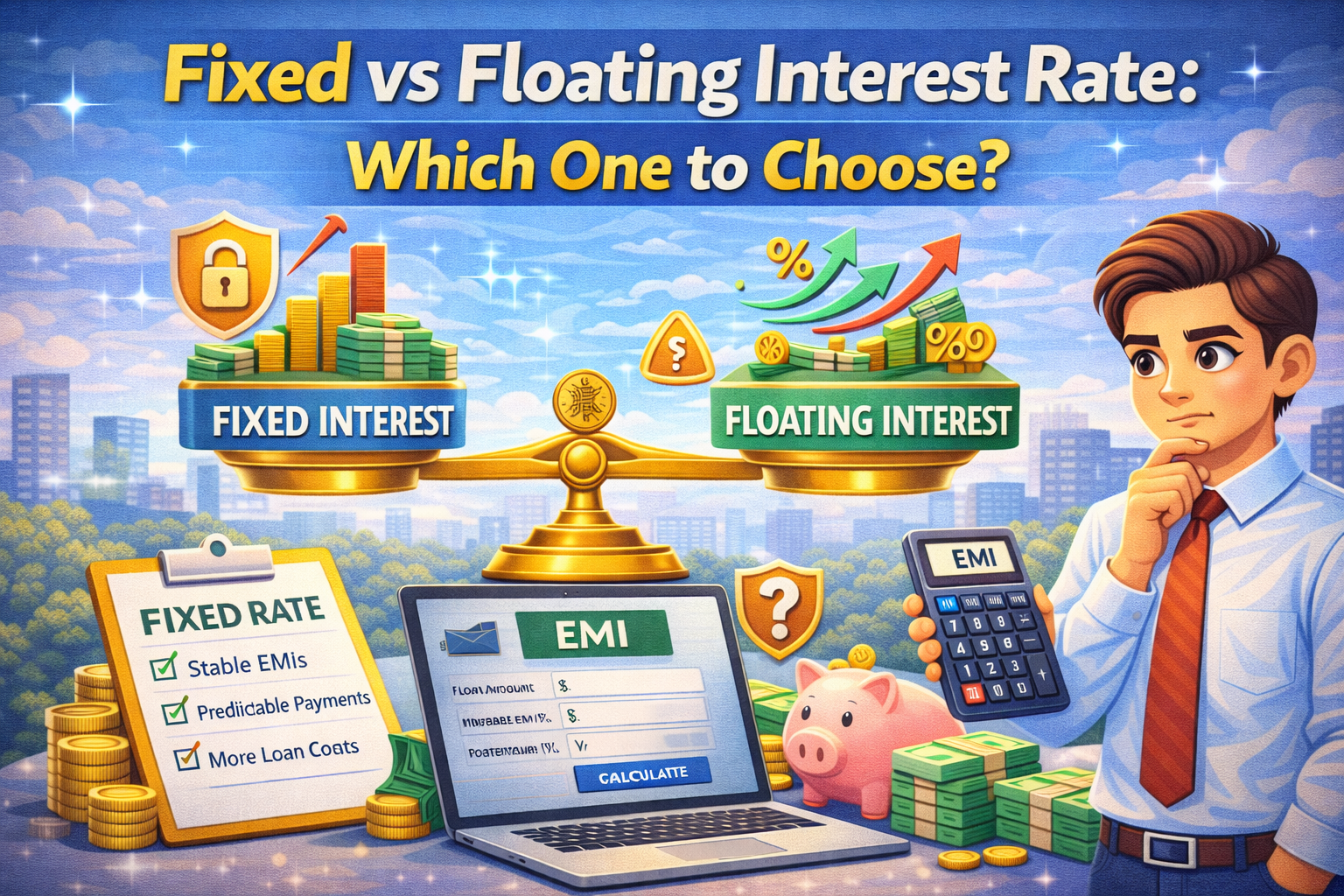
Fixed vs Floating Interest Rate: Which One to Choose?
When applying for a loan, one of the most important decisions you need to make is choosing between a fixed interest rate and a floating interest rate. This choice directly affects your monthly EMI and the total amount you repay over the loan period. Many borrowers get confused about which option is better because both have their own advantages and disadvantages.
Whether you are taking a home loan, car loan, or personal loan, understanding the difference between fixed and floating interest rates can help you make a better financial decision. In this guide, we will explain how these interest rates work and which one may be suitable for your financial situation.
What is a Fixed Interest Rate?
A fixed interest rate means the interest rate remains the same throughout the loan tenure. Once the bank approves your loan at a fixed rate, your EMI amount will remain constant for the entire repayment period.
For example, if you take a loan at an interest rate of 9% for 20 years, the rate will not change even if market interest rates increase or decrease in the future.
This type of loan is preferred by borrowers who want stability and predictable monthly payments.
Advantages of Fixed Interest Rate
Fixed interest rate loans provide several benefits for borrowers who prefer financial stability.
Stable EMI: Your monthly EMI remains the same throughout the loan tenure, making it easier to plan your finances.
Protection from Rising Rates: If market interest rates increase in the future, your loan interest rate will remain unchanged.
Better Budget Planning: Fixed EMIs help borrowers manage monthly budgets without worrying about sudden changes in loan payments.
Disadvantages of Fixed Interest Rate
Although fixed rates offer stability, they also come with some drawbacks.
Higher Interest Rate: Fixed interest rates are usually slightly higher than floating rates.
No Benefit from Rate Cuts: If market interest rates decrease, your loan interest rate will remain the same.
Possible Prepayment Charges: Some lenders may charge penalties for early loan repayment.
What is a Floating Interest Rate?
A floating interest rate changes based on market conditions and benchmark rates such as the RBI repo rate. When the benchmark rate changes, the bank adjusts your loan interest rate accordingly.
This means your EMI may increase or decrease during the loan tenure depending on market interest rate movements.
Floating interest rates are commonly used for home loans and long-term loans because they usually start with lower rates compared to fixed interest loans.
Advantages of Floating Interest Rate
Floating interest rate loans provide flexibility and potential cost savings.
Lower Initial Rates: Floating rates usually start lower than fixed interest rates.
Benefit from Rate Reductions: If market interest rates decrease, your EMI may also reduce.
No Prepayment Penalty: Many floating-rate loans allow prepayment without additional charges.
Disadvantages of Floating Interest Rate
Floating interest rates also have certain risks that borrowers should consider.
Uncertain EMI: Your EMI can increase if market interest rates rise.
Difficult Financial Planning: Changing EMIs can make long-term financial planning more challenging.
Market Dependency: Interest rates depend on economic conditions and RBI policies.
Fixed vs Floating Interest Rate Comparison
| Feature | Fixed Interest Rate | Floating Interest Rate |
|---|---|---|
| Interest Stability | Remains constant | Changes with market rates |
| EMI Amount | Fixed EMI | EMI may increase or decrease |
| Initial Rate | Usually higher | Usually lower |
| Risk Level | Low risk | Market risk |
| Benefit from Rate Cuts | No | Yes |
Which One Should You Choose?
Choosing between fixed and floating interest rates depends on your financial situation and risk tolerance.
If you prefer predictable monthly payments and want to avoid the risk of increasing interest rates, a fixed interest rate loan may be the better option.
However, if you are comfortable with market fluctuations and want to benefit from potential interest rate reductions, a floating interest rate loan may be more suitable.
For long-term loans such as home loans, many borrowers choose floating interest rates because they often offer lower interest costs over time.
Conclusion
Both fixed and floating interest rate loans have their own benefits and risks. Fixed rates offer stability and predictable EMIs, while floating rates provide flexibility and potential savings when market interest rates fall.
Before choosing a loan type, evaluate your financial stability, income consistency, and long-term financial goals. Understanding how interest rates work will help you select the best option for your loan and manage your finances effectively.
Quick Tip: Choose fixed interest rates for stability and predictable EMIs, and floating interest rates if you want to benefit from possible future interest rate reductions.
About the Author
Admin
MBA Finance | CFA | Ex-Banker
Financial expert with 15+ years of experience in banking and personal finance.