Home Loan Interest Rates 2026: Top Banks Comparison
MBA Finance | CFA | Ex-Banker
Published March 03, 2026
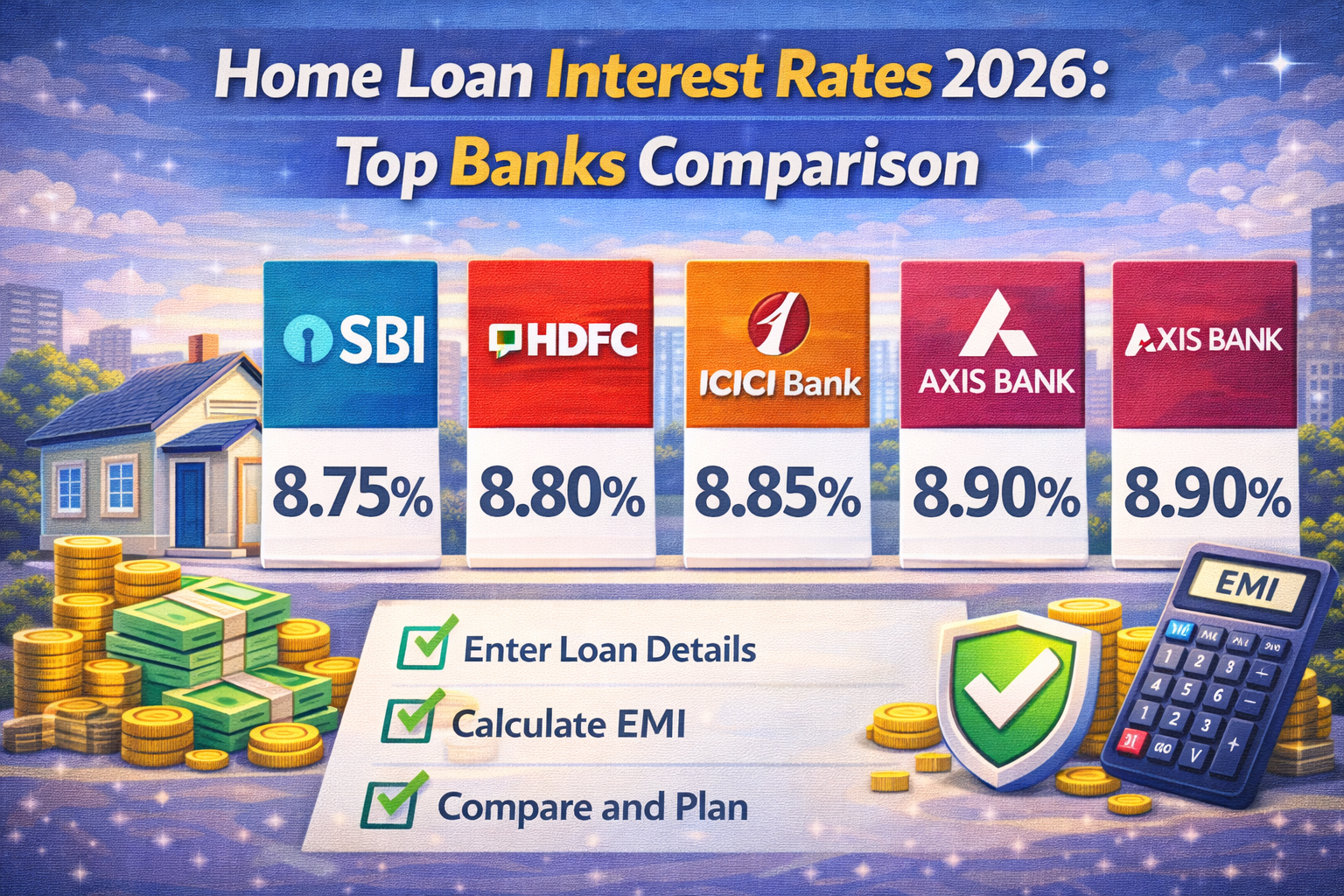
Home Loan Interest Rates 2026: Top Banks Comparison
Buying a home is one of the most important financial decisions in life. Since property prices are high, most people rely on home loans to purchase their dream house. A home loan allows you to buy a house today and repay the amount slowly through monthly EMIs. However, choosing the right bank and interest rate is extremely important because even a small difference in interest rates can save or cost you lakhs of rupees over time.
In 2026, home loan interest rates in India have become more competitive as banks are offering attractive rates to attract borrowers. Whether you are buying your first house, upgrading to a bigger home, or investing in property, understanding the latest home loan rates can help you make a smart financial decision.
What is a Home Loan Interest Rate?
A home loan interest rate is the percentage charged by the bank for lending money to purchase a property. This interest is added to the principal loan amount and paid through Equated Monthly Installments (EMIs). The interest rate plays a major role in determining your monthly EMI and the total repayment amount.
For example, if you take a loan of ₹30 lakh for 20 years, the total repayment amount will depend on the interest rate. Even a difference of 0.5% can significantly increase or decrease your total payment over the loan tenure.
Current Home Loan Rates
Home loan interest rates vary across banks based on your credit profile, income, loan amount, and repayment capacity. Below is a comparison of some of the top banks offering home loans in India in 2026.
| Bank | Interest Rate | Processing Fee |
|---|---|---|
| State Bank of India (SBI) | 8.40% - 9.65% | 0.35% |
| HDFC Bank | 8.50% - 9.75% | 0.50% |
| ICICI Bank | 8.60% - 9.85% | 0.45% |
| Axis Bank | 8.55% - 9.80% | 0.40% |
| Bank of Baroda | 8.45% - 9.70% | 0.40% |
| Punjab National Bank | 8.50% - 9.75% | 0.35% |
Factors That Affect Home Loan Interest Rates
Banks decide your home loan interest rate based on several factors. Understanding these factors can help you qualify for a lower interest rate.
Credit Score: Your CIBIL score is one of the most important factors. A score above 750 usually helps you get the best interest rates from banks.
Income Stability: People with stable income and good employment history are considered low-risk borrowers and may get better loan terms.
Loan Amount: Higher loan amounts may have slightly different interest rates depending on the bank's policy.
Loan Tenure: Longer loan tenures can sometimes result in slightly higher interest costs because the loan remains active for a longer time.
Property Location: Banks also consider the property location and project approval before deciding loan terms.
Fixed vs Floating Interest Rate
Home loans generally come with two types of interest rates: fixed and floating. Understanding the difference can help you choose the right option.
Fixed Interest Rate: The interest rate remains the same during the loan tenure. This provides stability because your EMI will not change even if market rates increase.
Floating Interest Rate: The rate changes based on RBI policies and market conditions. If rates fall, your EMI may decrease, but if rates increase, your EMI may also rise.
Tips to Get the Best Home Loan Interest Rate
Getting a lower interest rate can help you save a large amount over the loan period. Here are some useful tips to get the best home loan deal.
Maintain a High Credit Score: Try to keep your CIBIL score above 750. A good credit score shows lenders that you are a reliable borrower.
Compare Multiple Banks: Do not accept the first offer. Compare interest rates, processing fees, and loan benefits from different banks.
Choose the Right Loan Tenure: A longer tenure reduces EMI but increases total interest. Choose a tenure that balances affordability and total cost.
Negotiate With the Bank: Many banks are open to negotiation, especially if you have a strong credit profile.
Consider Balance Transfer: If another bank offers lower rates later, you can transfer your home loan to reduce interest costs.
Benefits of Taking a Home Loan
Home loans offer several benefits beyond just helping you buy a house. They also provide financial and tax advantages.
One of the biggest advantages is tax benefits. Under Indian tax laws, borrowers can claim deductions on both principal repayment and interest payment under different sections of the Income Tax Act.
Another benefit is property appreciation. Real estate values usually increase over time, making your home a valuable long-term investment.
Home loans also allow you to maintain liquidity. Instead of using all your savings to buy property, you can keep funds available for emergencies or other investments.
Conclusion
Home loan interest rates in 2026 remain competitive across major banks in India. Choosing the right bank, maintaining a good credit score, and comparing offers carefully can help you secure the best deal.
Before applying for a home loan, evaluate your financial situation, calculate your EMI affordability, and review all loan terms carefully. A well-planned home loan can help you achieve your dream of owning a home while keeping your finances stable.
Tips to Get Best Rate: Maintain CIBIL above 750, compare offers from multiple banks, maintain stable income, and negotiate with lenders to secure the lowest possible interest rate.
About the Author
Admin
MBA Finance | CFA | Ex-Banker
Financial expert with 15+ years of experience in banking and personal finance.