How to Reduce Your Loan EMI Without Stress
MBA Finance | CFA | Ex-Banker
Published March 19, 2026
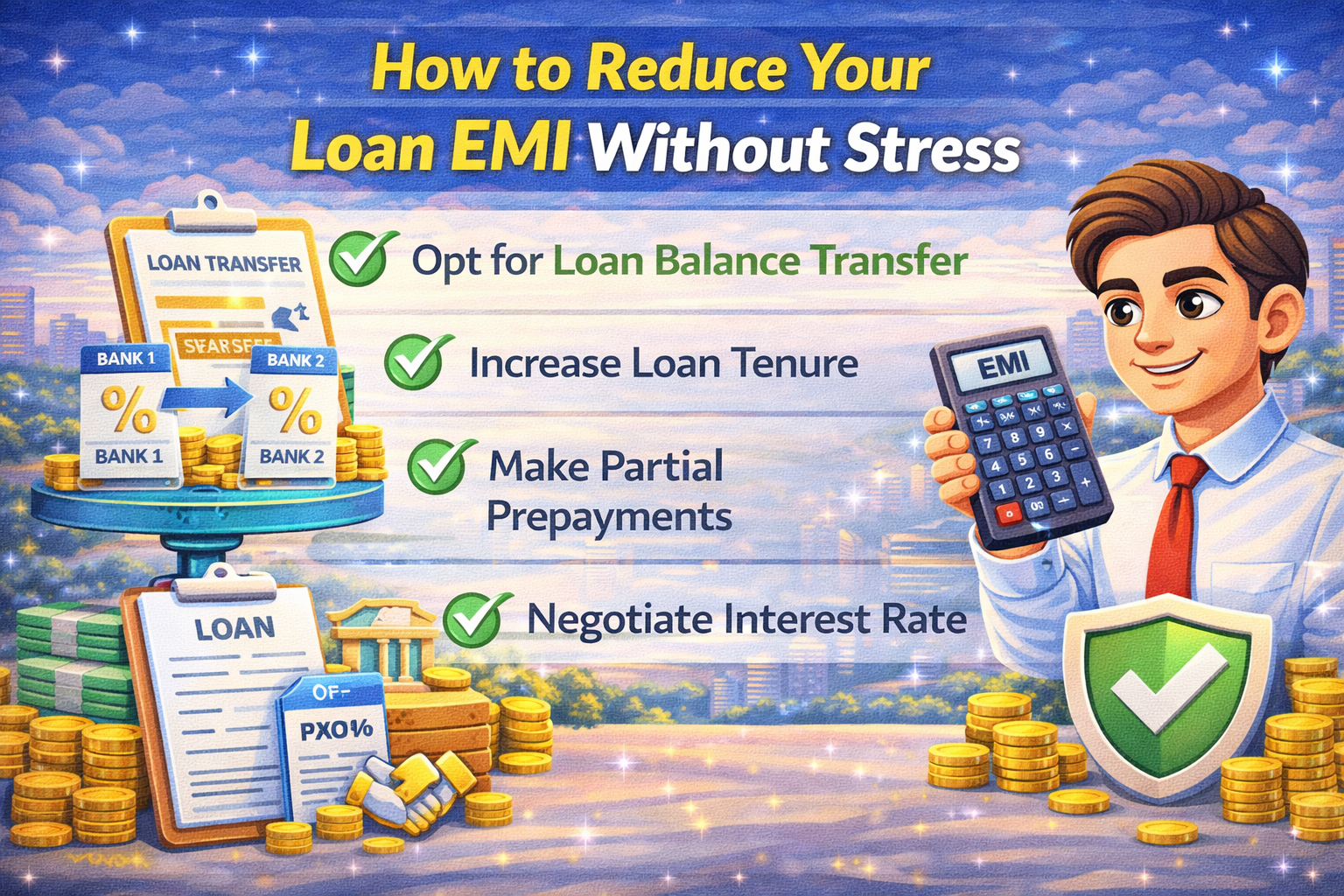
Managing loan EMIs can often feel stressful, especially when your monthly expenses are already high. Whether you have taken a personal loan, home loan, car loan, or any other type of loan, handling EMIs efficiently is very important for maintaining financial stability. Many people think EMI is fixed and cannot be changed, but in reality, there are several smart ways to reduce your EMI burden without creating financial pressure.
In this detailed guide, you will learn practical and easy methods to reduce your loan EMI, understand how EMI works, and how you can plan your finances better.
Understanding EMI in Simple Terms
EMI stands for Equated Monthly Installment. It is the fixed amount you pay every month to repay your loan. This amount includes both the principal and the interest. The EMI amount depends on three key factors: loan amount, interest rate, and loan tenure. If you change any of these factors, your EMI will also change.
For example, if your loan amount is high, your EMI will also be high. Similarly, if your interest rate is higher, your EMI increases. On the other hand, increasing the loan tenure reduces your EMI but increases the total interest you pay.
Why Reducing EMI is Important
Reducing EMI is important because it directly impacts your monthly budget. A lower EMI means you have more money available for savings, investments, and daily expenses. It also reduces financial stress and improves your ability to handle emergencies.
Many people struggle because they commit a large portion of their income to EMI payments. Ideally, your EMI should not exceed 30% to 40% of your monthly income. If it does, you should consider strategies to reduce it.
Increase Loan Tenure to Lower EMI
One of the simplest ways to reduce EMI is by increasing the loan tenure. When you extend the repayment period, the EMI amount gets distributed over a longer time, making each installment smaller.
For instance, if you take a loan of Rs. 5,00,000 at an interest rate of 10%, the EMI for 3 years will be much higher compared to a 5-year tenure. However, while this reduces your monthly burden, it increases the total interest paid over time.
So, always calculate the total cost before increasing tenure.
Make Partial Prepayments
Partial prepayment is one of the most effective ways to reduce EMI. Whenever you receive extra income such as bonuses, incentives, or savings, you can use it to repay a portion of your loan.
This reduces the principal amount, which directly lowers your EMI or shortens your loan tenure. Even small prepayments done regularly can significantly reduce your interest burden.
Opt for Balance Transfer
If your current loan has a high interest rate, you can transfer it to another bank that offers a lower rate. This process is known as a balance transfer.
A lower interest rate means lower EMI and reduced overall interest payment. However, before opting for a balance transfer, make sure to check processing fees, documentation charges, and other hidden costs.
Negotiate Interest Rate
Many borrowers are not aware that they can negotiate interest rates with their bank. If you have a good repayment history and a high credit score, banks may agree to reduce your interest rate.
Even a small reduction in interest rate can lead to a noticeable decrease in EMI.
Improve Your Credit Score
Your credit score plays a major role in determining your loan interest rate. A higher credit score increases your chances of getting loans at lower interest rates.
You can improve your credit score by paying EMIs on time, avoiding multiple loans, and maintaining a low credit utilization ratio. Once your score improves, you can refinance your loan at a better rate.
Switch to Floating Interest Rate
If your loan is currently on a fixed interest rate, you may be paying more compared to current market conditions. Switching to a floating rate can help reduce your EMI when interest rates go down.
However, floating rates can also increase, so it is important to understand the risks involved before making the switch.
Avoid Multiple Loans
Taking multiple loans at the same time increases your EMI burden and financial risk. It is always better to manage one loan at a time.
If you already have multiple loans, consider consolidating them into a single loan with a lower interest rate. This makes repayment easier and reduces overall EMI stress.
Use EMI Calculator for Planning
An EMI calculator is a very useful tool for financial planning. It helps you calculate your monthly installment based on loan amount, interest rate, and tenure.
Using a calculator allows you to compare different loan options and choose the one that fits your budget. It also helps you plan your finances more effectively.
Choose the Right Loan Amount
Many people take a higher loan than required, which increases their EMI burden. Always borrow only what you need and can comfortably repay.
Before taking a loan, evaluate your income, expenses, and future financial goals.
Increase Your EMI Gradually
If your income increases over time, you can increase your EMI amount. This helps you repay the loan faster and reduces the total interest paid.
This strategy is useful for salaried individuals who expect regular salary hikes.
Avoid Late Payments
Missing EMI payments leads to penalties and negatively impacts your credit score. This can increase your financial burden in the long run.
Always ensure timely payment of EMIs to maintain financial discipline.
Understand Hidden Charges
Loans often come with hidden charges such as processing fees, foreclosure charges, and late payment penalties. These costs can increase your overall financial burden.
Always read the loan agreement carefully before signing.
Emergency Fund is Important
Having an emergency fund helps you manage EMIs during difficult times such as job loss or medical emergencies. It acts as a financial safety net and prevents default.
Try to maintain at least 3 to 6 months of expenses as an emergency fund.
Real-Life Example
Suppose you take a loan of Rs. 10,00,000 at 10% interest for 5 years. Your EMI will be around Rs. 21,247. If you increase the tenure to 7 years, your EMI reduces to around Rs. 16,601.
However, the total interest paid increases significantly. This shows the importance of balancing EMI and total cost.
Smart Financial Planning Tips
Plan your loans based on your income and future goals. Avoid unnecessary expenses and focus on saving and investing alongside EMI payments. Always review your financial situation regularly and make adjustments as needed.
Conclusion
Reducing your EMI is possible with the right strategies and planning. By increasing tenure, making prepayments, improving your credit score, and choosing better loan options, you can manage your loan effectively.
Remember, the goal is not just to reduce EMI but also to maintain overall financial health. Always make informed decisions and use available tools like EMI calculators to stay in control of your finances.
With proper planning and discipline, you can reduce your EMI burden and achieve financial freedom without stress.
About the Author
Admin
MBA Finance | CFA | Ex-Banker
Financial expert with 15+ years of experience in banking and personal finance.