Loan Eligibility Check: Documents Required for Different Loans
MBA Finance | CFA | Ex-Banker
Published March 05, 2026
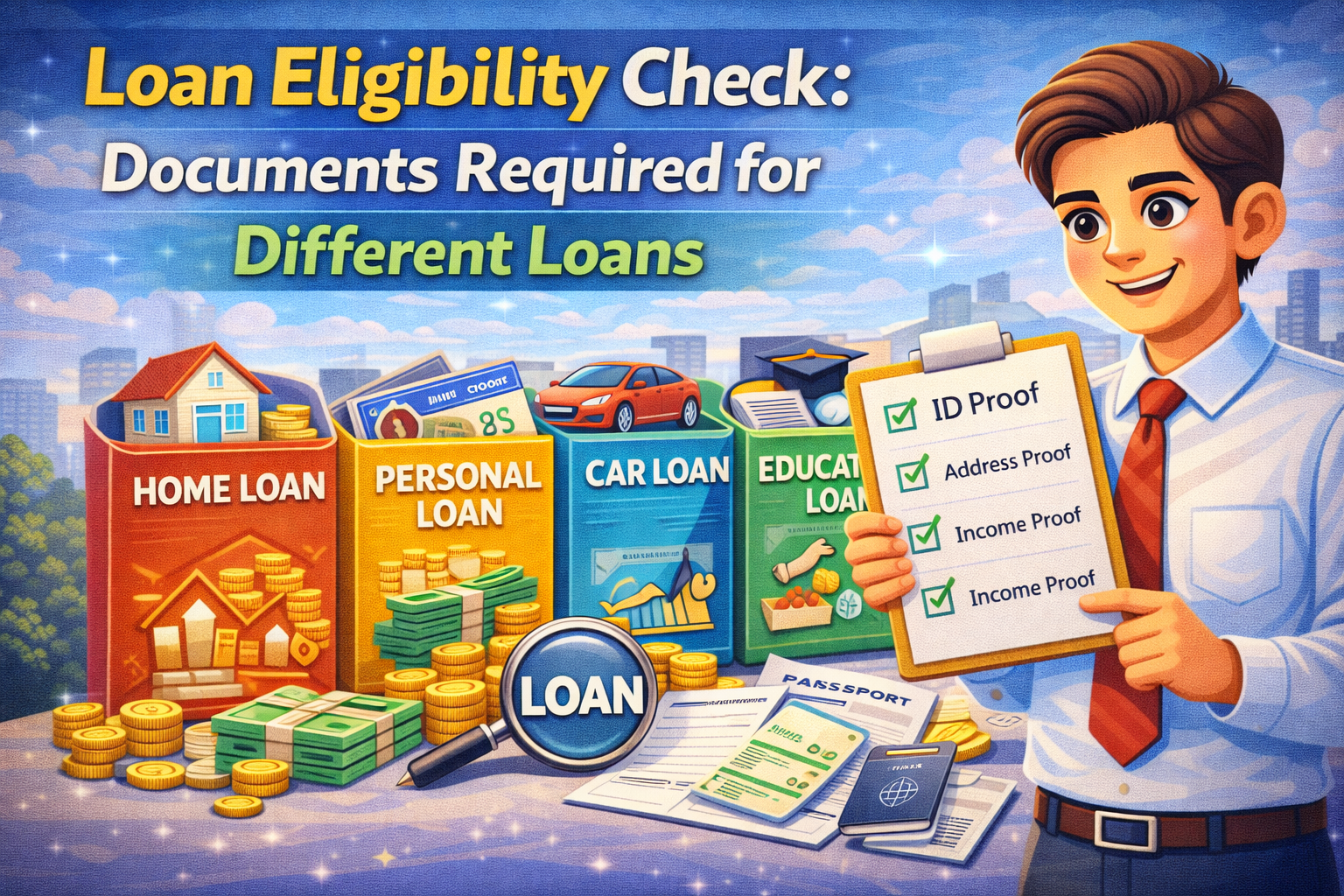
Loan Eligibility Check: Documents Required for Different Loans
Taking a loan has become very common today. Whether it is buying a home, purchasing a car, starting a business, or covering personal expenses, loans help people achieve their financial goals. However, before approving a loan, banks and financial institutions always check the eligibility of the borrower and verify certain documents.
Loan eligibility depends on several factors such as income, credit score, employment status, and repayment capacity. Providing the correct documents helps banks verify your financial stability and speeds up the loan approval process. In this guide, we will explain the common eligibility criteria and documents required for different types of loans in India.
What is Loan Eligibility?
Loan eligibility refers to the conditions that a borrower must meet to qualify for a loan. Banks evaluate your financial profile to determine whether you are capable of repaying the loan amount along with interest.
If you meet the eligibility requirements and provide the required documents, the bank will approve your loan and offer suitable terms such as interest rate, loan amount, and repayment tenure.
Common Loan Eligibility Criteria
Although eligibility criteria may vary slightly between lenders, most banks consider the following factors when evaluating a loan application.
Age: Most banks require borrowers to be between 21 and 60 years old for salaried individuals and up to 65 years for self-employed individuals.
Income Stability: A stable and regular income increases the chances of loan approval.
Credit Score: A higher CIBIL score (usually above 750) improves your chances of getting a loan with better interest rates.
Employment Type: Banks evaluate whether you are salaried, self-employed, or a business owner.
Existing Loans: If you already have multiple loans, the bank may reduce the loan amount or reject the application.
Basic Documents Required for Most Loans
Almost all types of loans require certain basic documents for identity verification and financial assessment.
| Document Type | Examples |
|---|---|
| Identity Proof | Aadhaar Card, PAN Card, Passport, Voter ID |
| Address Proof | Utility Bill, Aadhaar Card, Passport, Driving License |
| Income Proof | Salary Slips, Bank Statements, Income Tax Returns |
| Photographs | Recent Passport Size Photos |
| Bank Statements | Last 6 Months Bank Statement |
Documents Required for Home Loan
Home loans usually require additional property-related documents because the property acts as collateral for the loan.
Identity and Address Proof – Aadhaar Card, PAN Card, Passport, or Driving License.
Income Proof – Salary slips (last 3–6 months), bank statements, and Income Tax Returns.
Property Documents – Sale agreement, property title documents, and approved building plan.
Employment Proof – Employment certificate or business registration details for self-employed individuals.
Documents Required for Car Loan
Car loans generally require fewer documents compared to home loans because the vehicle itself acts as collateral.
Identity Proof – Aadhaar Card, PAN Card, Passport, or Driving License.
Address Proof – Utility bills, passport, or Aadhaar card.
Income Proof – Salary slips, bank statements, or Income Tax Returns.
Vehicle Details – Quotation or invoice from the car dealer.
Documents Required for Personal Loan
Personal loans are unsecured loans, meaning they do not require collateral. However, banks carefully verify income and credit history before approval.
Identity Proof – Aadhaar Card, PAN Card, Passport, or Driving License.
Income Proof – Salary slips, bank statements, and Income Tax Returns.
Employment Proof – Employee ID card or employment certificate.
Bank Statements – Last 3–6 months of bank statements.
Tips to Improve Loan Approval Chances
If you want faster loan approval and better loan terms, follow these useful tips before applying for a loan.
Maintain a High Credit Score: Try to keep your CIBIL score above 750 to increase your chances of loan approval.
Provide Complete Documents: Submitting all required documents avoids delays and improves approval chances.
Maintain Stable Income: Banks prefer borrowers with steady employment or consistent business income.
Avoid Multiple Loan Applications: Applying for too many loans at once may reduce your credit score and approval chances.
Reduce Existing Debt: Paying off existing loans or credit card balances improves your financial profile.
Conclusion
Loan eligibility checks and document verification are essential steps in the loan approval process. Banks evaluate your financial stability, credit score, and repayment capacity before approving a loan.
By maintaining a good credit score, providing accurate documents, and ensuring stable income, you can improve your chances of getting a loan approved quickly. Always review the loan terms carefully and borrow responsibly to maintain financial stability.
Quick Tip: Keep your identity proof, income documents, bank statements, and credit score ready before applying for any type of loan to speed up the approval process.
About the Author
Admin
MBA Finance | CFA | Ex-Banker
Financial expert with 15+ years of experience in banking and personal finance.