Business Loan EMI: Calculate and Plan Repayment
MBA Finance | CFA | Ex-Banker
Published March 11, 2026
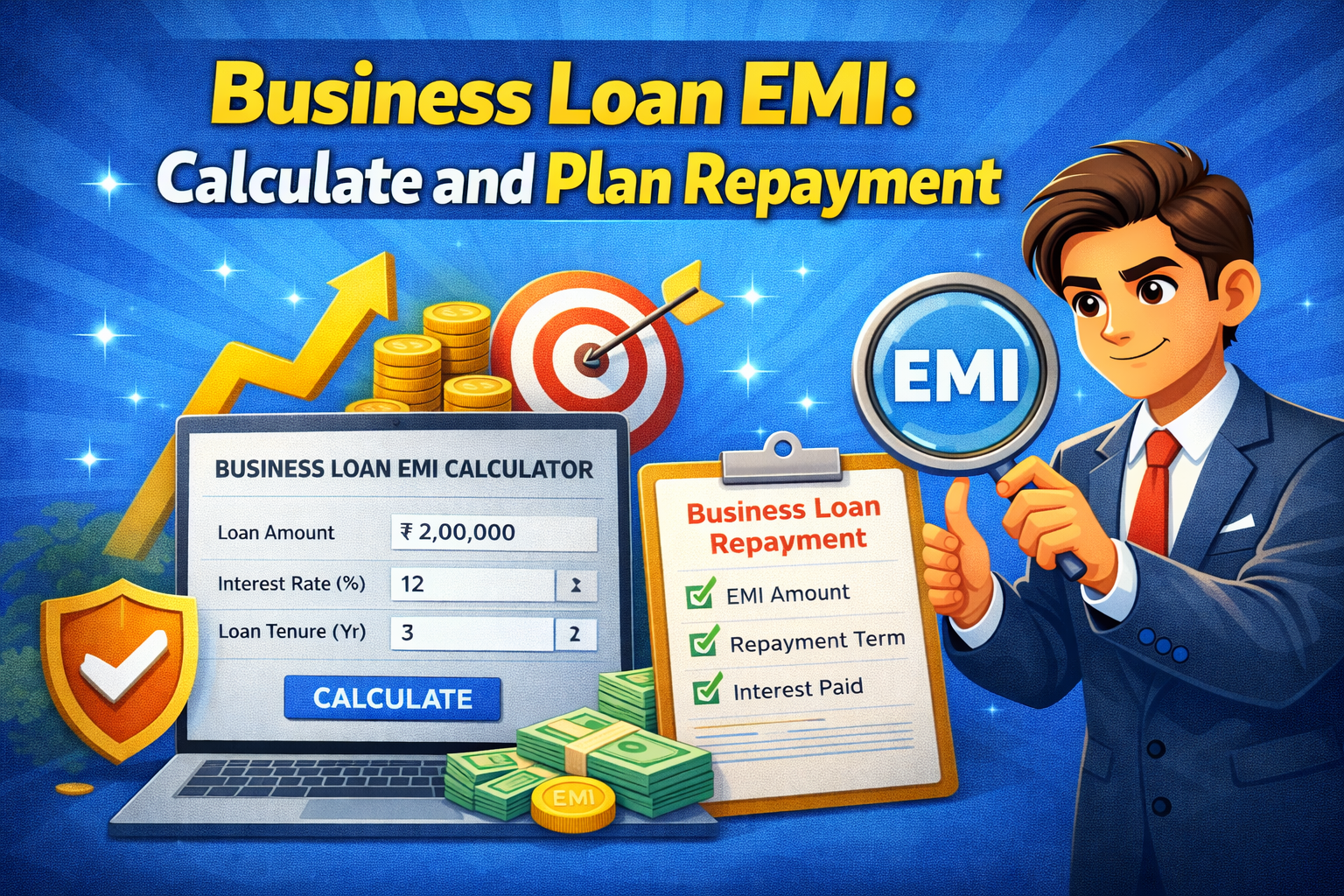
Business Loan EMI: Calculate and Plan Repayment
A business loan can be a powerful financial tool for entrepreneurs and business owners who want to expand operations, purchase equipment, manage working capital, or invest in new opportunities. However, before taking a loan, it is very important to understand how EMI (Equated Monthly Installment) works and how to plan repayment effectively.
EMI is the fixed amount that a borrower pays to the lender every month until the loan is completely repaid. Proper EMI planning ensures that your business cash flow remains stable while repaying the loan comfortably. In this guide, we will explain how business loan EMI is calculated, how interest rates affect repayment, and smart strategies to manage business loan payments.
What is Business Loan EMI?
Business Loan EMI (Equated Monthly Installment) is the monthly payment made by the borrower to repay the loan amount along with interest. Each EMI consists of two parts:
Principal Amount: The original loan amount borrowed.
Interest Amount: The cost charged by the lender for borrowing the money.
During the early months of repayment, a larger portion of the EMI goes toward paying interest. As time passes, more of the EMI contributes to reducing the principal balance.
Business Loan EMI Calculation Formula
The EMI for a business loan is calculated using the following formula:
EMI = P × R × (1+R)N / ((1+R)N − 1)
Where:
P = Loan Amount
R = Monthly Interest Rate
N = Loan Tenure in Months
Although the formula may look complex, most banks provide online EMI calculators that allow you to calculate the EMI instantly.
Business Loan EMI Example
Let’s understand how EMI works with a simple example.
| Loan Amount | Interest Rate | Tenure | Monthly EMI |
|---|---|---|---|
| ₹5,00,000 | 12% | 3 Years | ₹16,607 |
| ₹10,00,000 | 11% | 5 Years | ₹21,739 |
| ₹20,00,000 | 10% | 5 Years | ₹42,494 |
These values are approximate and may vary slightly depending on the lender’s calculation method and additional charges.
Factors That Affect Business Loan EMI
Several factors influence the EMI amount for a business loan.
Loan Amount: Higher loan amounts result in higher EMIs.
Interest Rate: A small increase in interest rate can significantly increase the EMI.
Loan Tenure: A longer tenure reduces EMI but increases the total interest paid.
Credit Score: Borrowers with higher credit scores may get lower interest rates.
Type of Loan: Secured business loans generally have lower interest rates compared to unsecured loans.
Types of Business Loan Repayment Options
Business loans come with different repayment structures depending on the lender and loan type.
Standard EMI Repayment: Fixed monthly payments throughout the loan tenure.
Bullet Repayment: Interest is paid monthly and the principal is paid at the end of the tenure.
Overdraft Facility: Interest is charged only on the amount utilized.
Flexible EMI Plans: Some lenders offer seasonal EMI options for businesses with fluctuating income.
Tips to Plan Business Loan Repayment
Planning EMI repayment carefully can help you manage your business finances efficiently. Here are some useful tips.
Analyze Your Cash Flow: Before taking a loan, evaluate whether your business generates enough monthly income to cover the EMI comfortably.
Choose the Right Tenure: Select a loan tenure that balances EMI affordability and total interest cost.
Maintain a Good Credit Score: A higher credit score helps you secure lower interest rates.
Use an EMI Calculator: Online EMI calculators help you estimate monthly payments and plan your budget.
Avoid Over-Borrowing: Borrow only the amount required for your business needs.
Keep an Emergency Fund: Maintain a reserve fund to manage EMIs during slow business periods.
Benefits of Business Loans
Business loans provide several advantages for entrepreneurs and small business owners.
Business Expansion: Funds can be used to expand operations or open new branches.
Working Capital Support: Helps manage daily operational expenses.
Equipment Purchase: Businesses can purchase machinery and technology upgrades.
Flexible Loan Amounts: Lenders offer different loan amounts depending on business requirements.
Common Mistakes to Avoid
When taking a business loan, avoid these common mistakes.
Ignoring hidden charges such as processing fees and foreclosure charges.
Choosing a longer tenure without considering the total interest cost.
Borrowing more money than required.
Missing EMI payments which can damage your credit score.
Conclusion
Business loans can help entrepreneurs achieve their growth goals, but proper EMI planning is essential to maintain financial stability. Understanding how EMIs are calculated, comparing interest rates, and choosing the right loan tenure can significantly reduce your repayment burden.
Before applying for a business loan, evaluate your business cash flow, compare multiple lenders, and use EMI calculators to estimate monthly payments. With careful planning, a business loan can become a powerful tool to grow your business while maintaining healthy financial management.
Smart Tip: Always ensure that your monthly EMI does not exceed 30-40% of your business income to maintain stable cash flow.
About the Author
Admin
MBA Finance | CFA | Ex-Banker
Financial expert with 15+ years of experience in banking and personal finance.