What is EMI? Complete Guide to EMI Calculation and Benefits
MBA Finance | CFA | Ex-Banker
Published March 01, 2026
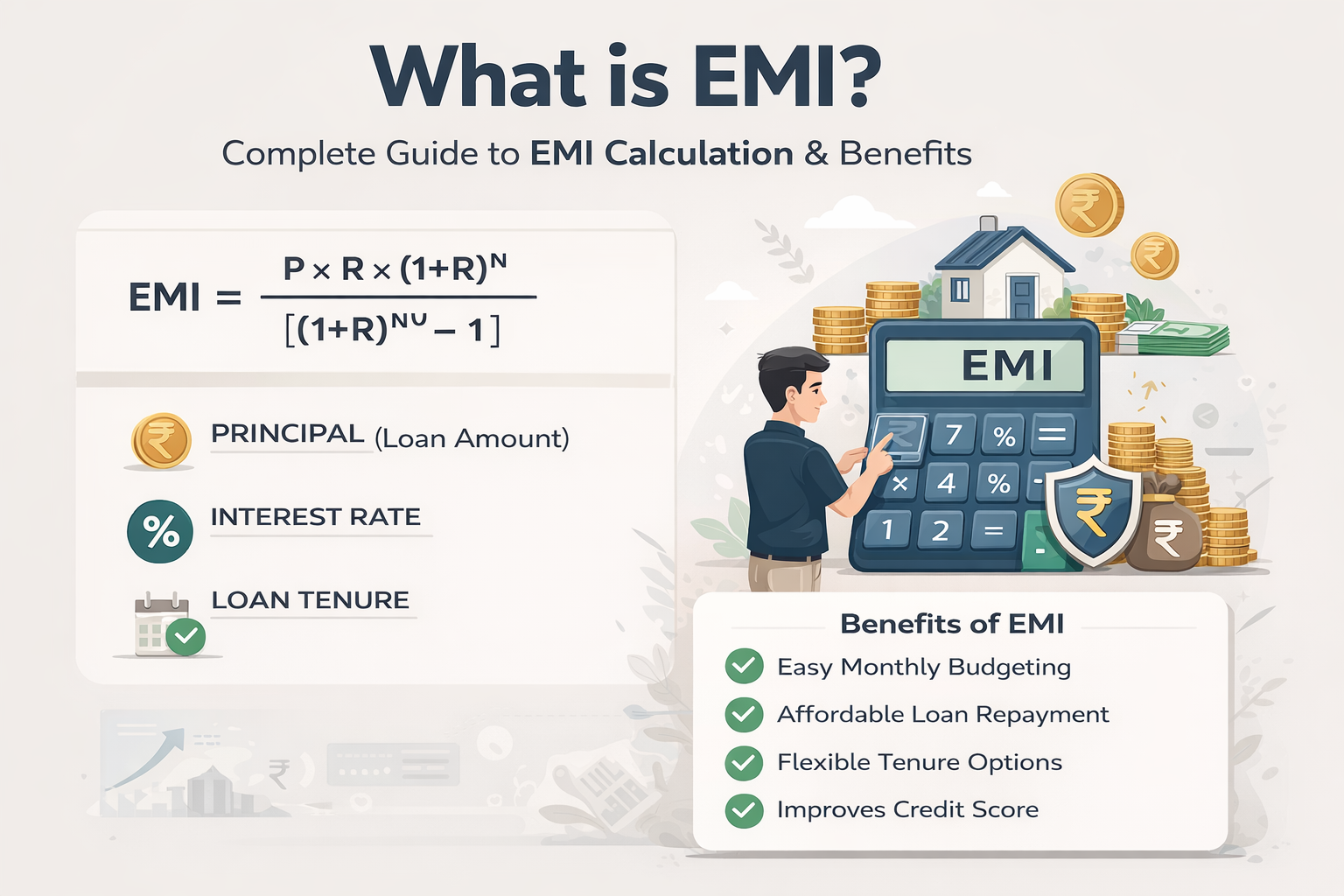
What is EMI? Complete Guide to EMI Calculation and Benefits
EMI is a common term used in the banking and finance world, especially when people take loans to purchase homes, vehicles, or other expensive items. EMI makes it easier for individuals to afford large purchases without paying the entire amount at once.
EMI stands for Equated Monthly Installment. It is the fixed amount a borrower pays to the lender every month to repay a loan over a specific period. Each EMI includes both the principal amount and the interest charged by the lender.
Understanding how EMI works is important before taking any loan. In this guide, we will explain what EMI is, how it is calculated, factors affecting EMI, and the benefits of EMI-based loan repayment.
What is EMI?
EMI (Equated Monthly Installment) is a fixed monthly payment made by a borrower to repay a loan. It allows borrowers to pay back the loan gradually instead of paying the full amount upfront.
For example, if you take a home loan, car loan, or personal loan, the bank divides the total repayment amount into equal monthly installments. These installments are paid over the loan tenure, which could range from a few months to several years.
Each EMI payment consists of two parts:
Principal: The original loan amount borrowed from the bank.
Interest: The cost charged by the lender for providing the loan.
During the initial stage of the loan tenure, a larger portion of EMI goes toward interest payment. Over time, the principal repayment gradually increases.
How EMI Works
When a borrower takes a loan from a bank or financial institution, the lender sets the interest rate and loan tenure. Based on these details, the EMI amount is calculated.
Once the loan is approved, the borrower must pay the EMI every month until the loan is fully repaid. If the borrower fails to pay the EMI on time, the lender may charge penalties or late fees.
EMI payments usually start from the next month after loan disbursement.
EMI Calculation Formula
Banks calculate EMI using a mathematical formula that considers the loan amount, interest rate, and loan tenure.
EMI = P × R × (1+R)N / ((1+R)N − 1)
Where:
P = Loan Amount
R = Monthly Interest Rate
N = Loan Tenure (in months)
Since the formula can be complex for manual calculation, most borrowers use online EMI calculators provided by banks and financial websites.
Example of EMI Calculation
| Loan Amount | Interest Rate | Tenure | Monthly EMI |
|---|---|---|---|
| ₹5,00,000 | 10% | 3 Years | ₹16,134 |
| ₹10,00,000 | 9% | 5 Years | ₹20,758 |
These examples show how EMI depends on the loan amount, interest rate, and repayment tenure.
Factors That Affect EMI
Several factors influence the EMI amount of a loan.
Loan Amount: Higher loan amounts result in higher EMIs.
Interest Rate: Higher interest rates increase the EMI.
Loan Tenure: Longer tenure reduces EMI but increases total interest cost.
Credit Score: A higher credit score can help you get lower interest rates.
Type of Interest Rate: Fixed or floating interest rates may affect EMI during the loan tenure.
Benefits of EMI Payment
EMI-based loans offer several advantages for borrowers.
Affordable Payments: EMI allows borrowers to repay loans in small monthly installments instead of paying a large amount at once.
Better Financial Planning: Fixed monthly payments help individuals manage their budgets easily.
Access to Large Purchases: EMI makes it possible to buy homes, cars, and other expensive items without immediate full payment.
Flexible Tenure: Borrowers can choose repayment periods according to their financial capacity.
Improves Credit Score: Regular EMI payments help build a strong credit history.
Types of Loans That Use EMI
EMI is commonly used for different types of loans offered by banks and financial institutions.
Home Loans
Car Loans
Personal Loans
Education Loans
Business Loans
Two-Wheeler Loans
Tips to Manage EMI Efficiently
Managing EMIs responsibly is important to maintain financial stability. Here are some useful tips.
Choose a loan amount that fits your income level.
Ensure your EMI does not exceed 35–40% of your monthly income.
Maintain a good credit score to get better interest rates.
Use an EMI calculator before applying for a loan.
Consider making prepayments whenever possible to reduce the loan burden.
Conclusion
EMI plays a vital role in modern loan systems by allowing borrowers to repay loans through manageable monthly installments. Understanding how EMI works helps borrowers make better financial decisions and choose the right loan options.
Before taking any loan, it is important to calculate EMI, compare interest rates, and select a repayment plan that matches your financial capacity. Proper planning ensures that you can repay your loan comfortably without putting pressure on your finances.
Financial Tip: Always plan your EMI carefully and avoid taking multiple loans that may exceed your repayment capacity.
About the Author
Admin
MBA Finance | CFA | Ex-Banker
Financial expert with 15+ years of experience in banking and personal finance.