Loan Comparison: Which Loan is Best for Your Needs?
MBA Finance | CFA | Ex-Banker
Published March 06, 2026
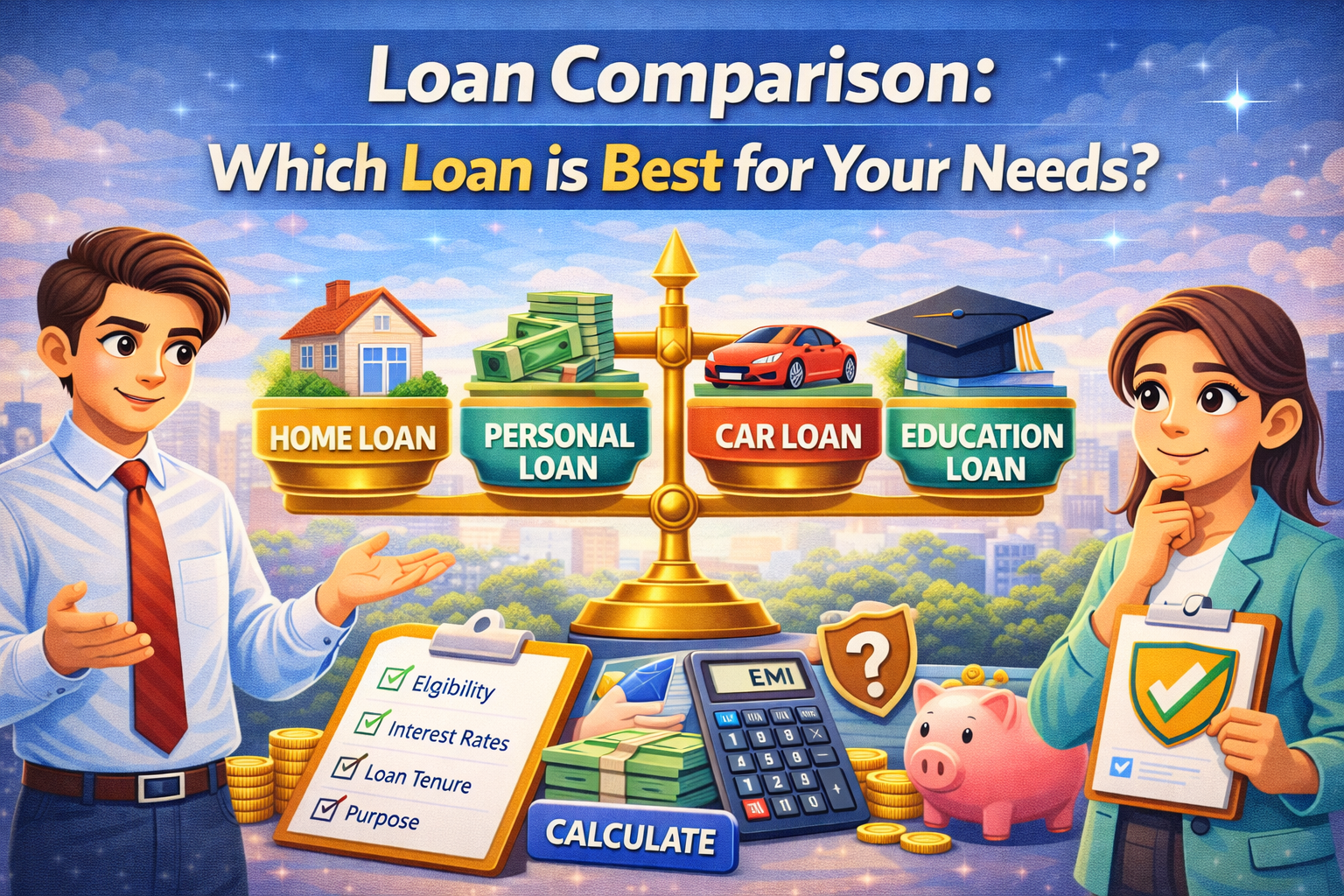
Loan Comparison: Which Loan is Best for Your Needs?
Loans play an important role in helping people achieve their financial goals. Whether you want to buy a home, purchase a car, fund education, start a business, or manage unexpected expenses, loans provide financial support when needed. However, choosing the right type of loan is very important because each loan has different interest rates, repayment periods, and conditions.
Many borrowers often get confused when deciding between different loan options such as home loans, personal loans, car loans, education loans, or business loans. The best loan for you depends on your purpose, financial stability, and repayment capacity. In this guide, we will compare the most common types of loans and help you understand which loan may be best for your needs.
What is a Loan?
A loan is an amount of money borrowed from a bank or financial institution that must be repaid with interest over a specific period. The repayment is usually made through monthly installments called EMIs (Equated Monthly Installments).
Loans can be classified into two main categories: secured loans and unsecured loans. Secured loans require collateral such as property or vehicles, while unsecured loans do not require any asset as security. :contentReference[oaicite:0]{index=0}
Common Types of Loans in India
Banks and financial institutions offer various types of loans based on the borrower’s requirements. Some of the most common loan types include home loans, personal loans, car loans, education loans, and business loans.
Each loan type has different interest rates and repayment tenures depending on the level of risk for lenders. Secured loans usually have lower interest rates compared to unsecured loans. :contentReference[oaicite:1]{index=1}
Loan Types Comparison
| Loan Type | Interest Rate (Approx) | Tenure | Best For |
|---|---|---|---|
| Home Loan | 8% – 9.5% | Up to 30 Years | Buying or building a house |
| Car Loan | 9% – 12% | Up to 7 Years | Buying a vehicle |
| Personal Loan | 10% – 18% | 1 – 5 Years | Emergency or personal expenses |
| Education Loan | 8% – 13% | Up to 15 Years | Higher education |
| Business Loan | 12% – 20% | Varies | Starting or expanding a business |
| Gold Loan | 8% – 12% | Up to 3 Years | Quick funds using gold as collateral |
In general, secured loans like home loans and gold loans offer lower interest rates because they are backed by assets. Unsecured loans such as personal loans have higher interest rates because they do not require collateral. :contentReference[oaicite:2]{index=2}
Home Loan vs Personal Loan
A home loan is ideal when you want to purchase or build a property. It offers lower interest rates and longer repayment tenure, making EMIs more affordable.
On the other hand, personal loans are unsecured loans that can be used for various purposes such as medical emergencies, travel, or weddings. However, they usually come with higher interest rates and shorter repayment periods.
Car Loan vs Personal Loan
If you want to buy a vehicle, a car loan is usually a better option than a personal loan because it has lower interest rates and longer repayment periods. The vehicle itself acts as collateral for the loan.
Personal loans can also be used to buy a car, but they generally have higher interest rates and may increase your monthly EMI burden.
Loan Against Property vs Personal Loan
Loan Against Property (LAP) allows you to borrow money using your property as collateral. This loan type usually offers lower interest rates compared to personal loans and allows longer repayment tenures.
However, since your property is pledged as security, failing to repay the loan may result in losing the property.
Factors to Consider Before Choosing a Loan
Before selecting a loan, it is important to evaluate several factors to ensure you choose the right option.
Interest Rate: Lower interest rates reduce the overall cost of the loan.
Loan Tenure: Longer tenure reduces EMI but increases total interest paid.
Loan Amount: Choose a loan that meets your financial needs without creating excessive debt.
Processing Fees: Some lenders charge fees for loan processing and documentation.
Prepayment Charges: Check if the bank charges penalties for early repayment.
Tips to Choose the Best Loan
Choosing the right loan requires careful planning and financial awareness.
Understand Your Purpose: Always select a loan specifically designed for your financial goal.
Compare Multiple Lenders: Compare interest rates, processing fees, and repayment terms before making a decision.
Maintain a Good Credit Score: A CIBIL score above 750 helps you get loans at lower interest rates.
Check EMI Affordability: Ensure that your EMI does not exceed 30–40% of your monthly income.
Conclusion
Different loans are designed for different financial needs, and choosing the right one can help you save money and manage your finances effectively. Home loans are ideal for property purchases, car loans are best for vehicle financing, and personal loans are suitable for short-term financial needs.
Before applying for any loan, carefully compare loan types, interest rates, and repayment terms. Proper financial planning and responsible borrowing will help you choose the loan that best fits your needs while keeping your finances stable.
Quick Tip: The best loan is not always the one with the lowest interest rate — it is the one that matches your financial goal, repayment ability, and long-term financial plan.
About the Author
Admin
MBA Finance | CFA | Ex-Banker
Financial expert with 15+ years of experience in banking and personal finance.