How Interest Rate Changes Affect Your EMI
MBA Finance | CFA | Ex-Banker
Published March 22, 2026
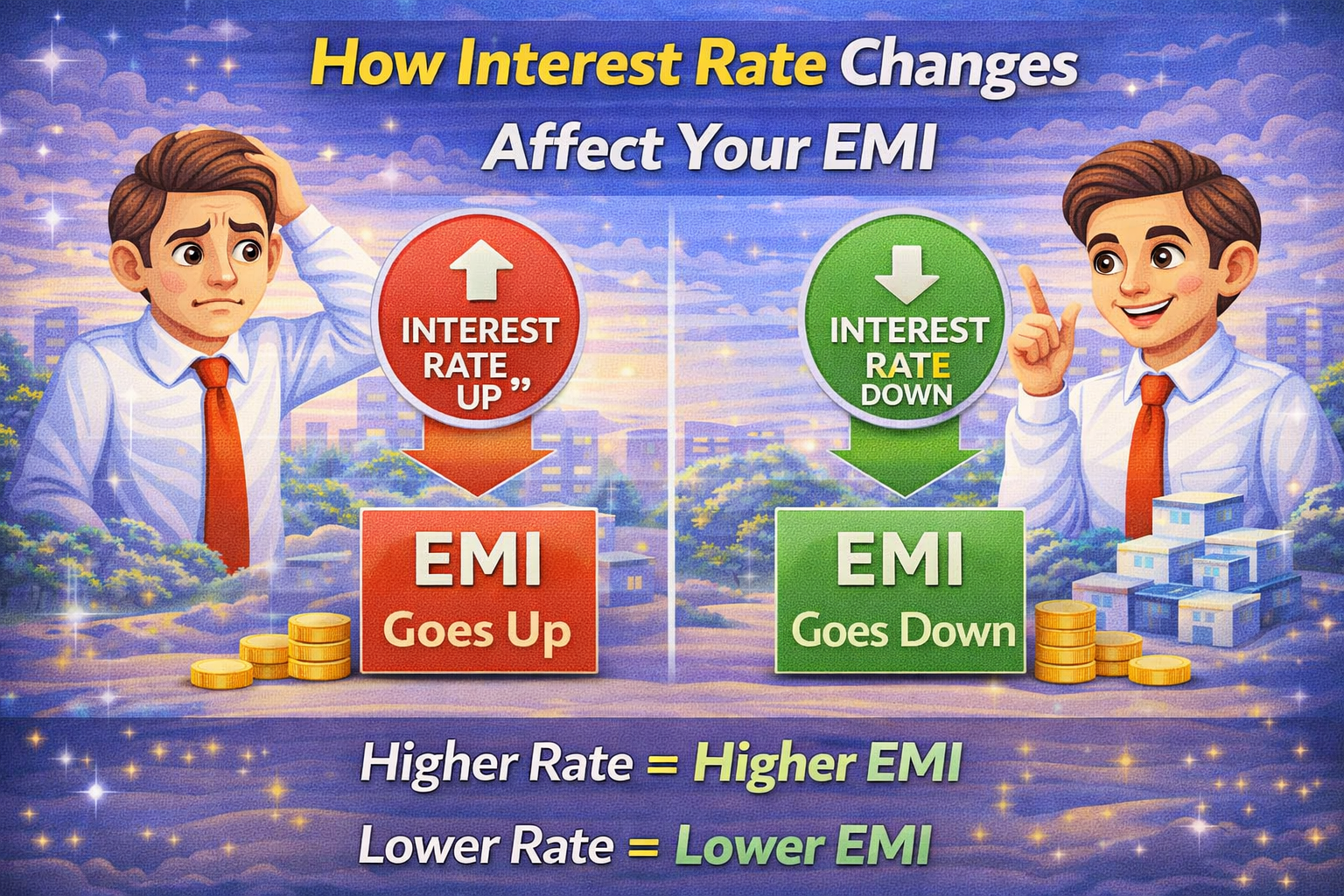
How Interest Rate Changes Affect Your EMI
When you take any type of loan, whether it is a home loan, personal loan, or car loan, one of the most important factors that affects your monthly payment is the interest rate. Many people focus only on EMI amount at the time of taking the loan, but they often ignore how changes in interest rate over time can impact their financial planning.
Interest rates are not always constant. They change based on market conditions, economic policies, inflation, and decisions made by central banks. These changes can directly affect your EMI, especially if you have taken a loan with a floating interest rate.
In this detailed guide, we will explain how interest rate changes affect your EMI, how to calculate the impact, and what strategies you can use to manage your loan efficiently.
Understanding Interest Rate in Loans
Interest rate is the cost you pay to the bank or lender for borrowing money. It is usually expressed as a percentage of the loan amount. The higher the interest rate, the higher your EMI and total repayment amount.
There are mainly two types of interest rates in loans. Fixed interest rate and floating interest rate. In fixed rate loans, the interest remains constant throughout the loan tenure. In floating rate loans, the interest rate changes based on market conditions.
Fixed Interest Rate vs Floating Interest Rate
| Type | EMI Stability | Risk Level |
|---|---|---|
| Fixed Rate | Stable EMI | Low Risk |
| Floating Rate | EMI Changes | Medium Risk |
Most home loans in India are offered with floating interest rates, which means your EMI can increase or decrease depending on market trends.
How Interest Rate Increase Affects EMI
When interest rates increase, your EMI also increases if you are on a floating rate loan. This can put pressure on your monthly budget. For example, even a 1% increase in interest rate can significantly increase your EMI over a long tenure.
Sometimes, instead of increasing EMI, banks may increase the loan tenure. This means you will pay for a longer period, increasing the total interest paid.
How Interest Rate Decrease Affects EMI
When interest rates decrease, your EMI reduces, giving you financial relief. You can either enjoy lower monthly payments or continue paying the same EMI to reduce your loan tenure faster.
This is a good opportunity to save money on interest and close your loan early.
EMI Calculation Example
| Loan Amount | Interest Rate | Tenure | EMI |
|---|---|---|---|
| ₹10,00,000 | 10% | 5 Years | ₹21,247 |
| ₹10,00,000 | 11% | 5 Years | ₹21,739 |
As you can see, even a small increase in interest rate leads to higher EMI.
Tips to Manage EMI When Interest Rates Change
Always keep track of interest rate trends and economic updates.
Maintain an emergency fund to handle sudden EMI increases.
Make partial prepayments whenever possible.
Consider refinancing your loan at a lower interest rate.
Avoid taking multiple loans at the same time.
Long-Term Financial Planning
Interest rate changes are part of the economic cycle. Proper planning helps you manage these changes without stress.
Always choose EMI that is affordable even if rates increase slightly in the future.
A disciplined approach ensures financial stability and peace of mind.
Conclusion
Interest rate changes can have a significant impact on your EMI and overall loan cost. By understanding how these changes work and planning accordingly, you can manage your loan efficiently and avoid financial stress.
Financial Tip: Always calculate EMI at different interest rates before taking a loan to stay prepared for future changes.
About the Author
Admin
MBA Finance | CFA | Ex-Banker
Financial expert with 15+ years of experience in banking and personal finance.